If you work in an organisation that deals with social, commercial or financial planning - or any type of public policy planning - then you've got wicked problems. You may not call them by this name, but you know what they are. They are those complex, ever changing societal and organisational planning problems that you haven't been able to treat with much success, because they won't keep still. They're messy, devious, and they fight back when you try to deal with them. This paper describes the notion of wicked problems (WPs) as put forward by Rittel & Webber in their landmark article "Dilemmas in a General Theory of Planning" (1973). It presents the ten criteria they use to characterise WPs, and describes how General Morphological Analysis (GMA) can be used to model and analyse such problem complexes.
Keywords: Wicked problems, general morphological analysis, policy analysis, Horst Rittel
Introduction
In 1973, Horst Rittel and Melvin Webber, both urban planners at the University of Berkley in California, wrote an article for
Policy Sciences with the astounding title "Dilemmas in a General Theory of Planning". In this landmark article, the authors observed that there is a whole realm of social planning problems that cannot be successfully treated with traditional linear, analytical (systems-engineering-like) approaches. They called these
wicked problems, in contrast to
tame problems.
At first glance, it is not self-evident what is actually meant by this term. Both the words "wicked" and "problem" need to be qualified: Problems are "wicked" not in the sense of being "evil", but in that they are seriously devious and can have (nasty) unintended consequences for the planners who try to do something about them. Furthermore, as a decision maker, whatever decision you make, a good portion of the stakeholders involved (often a majority of them!) are going to want your head on a block!
Also, wicked problems are not actually "problems" in the sense of having well defined and stable problem statements. They are too messy for this, which is why they have also been called social messes and unstructured reality (Ackoff, 1974; Horn, 2001).
One need only read Rittel & Webber's wonderfully provocative abstract in order to understand how politically un-correct their article was at the time:
|
"The search for scientific bases for confronting problems of social policy is bound to fail, because of the nature of these problems. They are "wicked" problems, whereas science has de-veloped to deal with "tame" problems. Policy problems cannot be definitively described. Moreover, in a pluralistic society there is nothing like the undisputable public good; there is no objective definition of equity; policies that respond to social problems cannot be meaningfully correct or false; and it makes no sense to talk about "optimal" solutions to social problems unless severe qualifications are imposed first. Even worse, there are no "solutions" in the sense of definitive and objective answers." (Rittel & Webber, 1973, Abstract.)
|
Some say that we are wiser today, and less susceptible to the belief that complex social planning problems can be "solved" by linear methods akin to engineering solutions. I am not so sure about this. In any event, it is instructive to look at the original formulation of the distinction between "wicked" and "tame" problems.
First, let us look at what characterises a
tame problem. A tame problem
- has a relatively well-defined and stable problem statement.
- has a definite stopping point, i.e. we know when the solution or a solution is reached.
- has a solution which can be objectively evaluated as being right or wrong.
- belongs to a class of similar problems which can be solved in a similar manner.
- has solutions which can be tried and abandoned.
Wicked problems are completely different. Wicked problems are ill-defined, ambiguous and associated with strong moral, political and professional issues. Since they are strongly stakeholder dependent, there is often little consensus about what the problem is, let alone how to resolve it. Furthermore, wicked problems won't keep still: they are sets of complex, interacting issues evolving in a dynamic social context. Often, new forms of wicked problems emerge
as a result of trying to understand and solve one of them.
|
"The classical systems approach … is based on the assumption that a planning project can be organized into distinct phases: 'understand the problems', 'gather information,' 'synthesize information and wait for the creative leap,' 'work out solutions' and the like. For wicked problems, however, this type of scheme does not work. One cannot understand the problem without knowing about its context; one cannot meaningfully search for information without the orientation of a solution concept; one cannot first understand, then solve." (Rittel & Webber, 1974, p. 161)
|
The most evident, and important, wicked problems are complex, long-term social and organisational planning problems.
- How should we fight the "War on Terrorism?"
- How do we get genuine democracies to emerge from authoritarian regimes?
- What is a good national immigration policy?
- How should scientific and technological development be governed?
- How should we deal with crime and violence in our schools?
- How should our organisation develop in the face of an increasingly uncertain future?
In his work on "Wicked Problems and Social Complexity" (2001), Jeff Conklin writes:
"… there are two common organizational coping mechanisms that are routinely applied to wicked problems: studying the problem, and taming it.
"While studying a novel and complex problem is natural and important, it is an approach that will run out of gas quickly if the problem is wicked. Pure study amounts to procrastination, because lit-tle can be learned about a wicked problem by objective data gathering and analysis. Wicked problems demand an opportunity-driven approach; they require making decisions, doing experiments, launching pilot programs, testing prototypes, and so on. Study alone leads to more study, and results in the condition known as 'analysis paralysis,' a Catch 22 in which we can't take action until we have more information, but we can't get more information until someone takes action. …
"... attempting to tame a wicked problem, while appealing in the short run, fails in the long run. The wicked problem simply reasserts itself, perhaps in a different guise, as if nothing had been done. Or, worse, sometimes the tame solution exacerbates the problem." (p. 10f.)
|
Of course, problems are "wicked" and "tame" only
a potiori. In practice there is a sort of gliding scale between tameness and wickedness. There is, however, a set of pretty clear criteria for judging the degree of wickedness (so to speak) associated with complex social and organisational planning problems. We will look at Rittel and Webber's ten criteria shortly.
Also, the "problem" that the concept of wicked problems addresses did not suddenly emerge in the late 1960's and early 1970's. WPs are about people, vested interests and politics. As such, they are as old as human society itself. So, why did a number of different policy researchers start fussing about this issue all at the same time - in the late 1960's?
During a presentation of General Morphological Analysis (GMA) in the 1990's, I naively put this question to a group of U.S. security specialists (see Ritchey, 2011). They practically fell off their chairs with laughter! What was going on? The Vietnam War was going on, along with the "War on Poverty" and the "War on Drugs". All of these "wars" were essentially managed (badly) like huge engineering projects, and all ultimately bogged down or went seriously wrong. Also "going on", as a reaction to government policy (or lack thereof), were the Civil Rights Movement, the anti-war demonstrations and the general baby boomer "revolution".
It is no wonder that academics representing social planners and policy professionals sought a new awareness and new modes of explanation. As Rittel & Webber put it in 1973 (I paraphrase): The "publics" are not going to take it any longer, and planners are going to be held accountable for what they do, or don't do. (Wouldn't that have been nice?)
So what is the problem that the term "wicked problem" addresses? The common sense approach to WPs is fairly straight forward: As stated above, WPs are about people - the most "complex adaptive systems" that we know of. They are subjective problems. Everything that has to do with people and society is ultimately subjective. Above all, WPs are about people as stakeholders: competing and cooperating, vying for position, willing to reflect, and to change their positions on the basis of this self-reflection. This is why such problems do not have stable problem formulations; do not have pre-defined solution concepts; and why their course of development cannot be predicted. This is also why attempting to causally model or simulate the paths of development of such problem complexes is often worse than useless.
Finally, I want to at least mention an issue that has begun to be a problem in itself: namely, that the term "wicked problem" is currently being transformed from a management science and design theoretical term d'art into a media buzzword and piece of consultancy jargon that has lost its original meaning. This is especially the case since the 2008 "credit crunch", where we find quick-fix policy consultants and self-help management gurus telling us how they can "solve your wicked problems". This only shows that these individuals have, at best, missed the point.
Ten Criteria for Wicked Problems
Rittel and Webber characterise wicked problems by the following 10 criteria. (It has been pointed out that some of these criteria are closely related or have a high degree overlap, and that they should therefore be condensed into four or five more general criteria. I think that this is a mistake, and that we should treat these criteria as 10
heuristic perspectives which will help us better understand the nature of such complex social planning issues.)
1. There is no definite formulation of a wicked problem.
- "The information needed to understand the problem depends upon one's idea for solving it. This is to say: in order to describe a wicked problem in sufficient detail, one has to develop an exhaustive inventory for all the conceivable solutions ahead of time." [This seemingly incredible criterion is in fact treatable. See below.]
2. Wicked problems have no stopping rules.
- In solving a tame problem, "… the problem-solver knows when he has done his job. There are criteria that tell when the solution or a solution has been found". With wicked problems you never come to a "final", "complete" or "fully correct" solution - since you have no objective criteria for such. The problem is continually evolving and mutating. You stop when you run out of resources, when a result is subjectively deemed "good enough" or when we feel "we've done what we can…"
3. Solutions to wicked problems are not true-or-false, but better or worse.
- The criteria for judging the validity of a "solution" to a wicked problem are strongly stakeholder dependent. However, the judgments of different stakeholders …"are likely to differ widely to accord with their group or personal interests, their special value-sets, and their ideological predilections." Different stakeholders see different "solutions" as simply better or worse.
4. There is no immediate and no ultimate test of a solution to a wicked problem.
- "… any solution, after being implemented, will generate waves of consequences over an extended - virtually an unbounded - period of time. Moreover, the next day's consequences of the solution may yield utterly undesirable repercussions which outweigh the intended advantages or the advantages accomplished hitherto."
5. Every solution to a wicked problem is a "one-shot operation"; because there is no opportunity to learn by trial-and-error, every attempt counts significantly.
- "… every implemented solution is consequential. It leaves "traces" that cannot be undone … And every attempt to reverse a decision or correct for the undesired consequences poses yet another set of wicked problems … ."
6. Wicked problems do not have an enumerable (or an exhaustively describable) set of potential solutions, nor is there a well-described set of permissible operations that may be incorporated into the plan.
- "There are no criteria which enable one to prove that all the solutions to a wicked problem have been identified and considered. It may happen that no solution is found, owing to logical inconsistencies in the 'picture' of the problem."
7. Every wicked problem is essentially unique.
- "There are no classes of wicked problems in the sense that the principles of solution can be developed to fit all members of that class." …Also, …"Part of the art of dealing with wicked problems is the art of not knowing too early which type of solution to apply." [Note: this is very important point. See below.]
8. Every wicked problem can be considered to be a symptom of another [wicked] problem.
- Also, many internal aspects of a wicked problem can be considered to be symptoms of other internal aspects of the same problem. A good deal of mutual and circular causality is involved, and the problem has many causal levels to consider. Complex judgements are required in order to determine an appropriate level of abstraction needed to define the problem.
9. The causes of a wicked problem can be explained in numerous ways. The choice of explanation determines the nature of the problem's resolution.
- "There is no rule or procedure to determine the 'correct' explanation or combination of [explanations for a wicked problem]. The reason is that in dealing with wicked problems there are several more ways of refuting a hypothesis than there are permissible in the [e.g. physical] sciences."
10. [With wicked problems,] the planner has no right to be wrong.
- In "hard" science, the researcher is allowed to make hypotheses that are later refuted. Indeed, it is just such hypothesis generation that is a primary motive force behind scientific development (Ritchey, 1991). Thus one is not penalised for making hypothesis that turn out to be wrong. "In the world of … wicked problems no such immunity is tolerated. Here the aim is not to find the truth, but to improve some characteristic of the world where people live. Planners are liable for the consequences of the actions they generate …"
Modelling Wicked Problems with General Morphological Analysis
How, then, does one work wicked problems? Some 20 years after Rittel & Webber wrote their article, Jonathan Rosenhead (1996), of the London School of Economics, presented the following criteria for dealing with complex social planning problems - criteria that were clearly influenced by the ideas presented by Rittle & Webber.
- Accommodate multiple alternative perspectives rather than prescribe single solutions
- Function through group interaction and iteration rather than back office calculations
- Generate ownership of the problem formulation through stakeholder participation and transparency
- Facilitate a graphical (visual) representation of the problem space for the systematic, group exploration of a solution space
- Focus on relationships between discrete alternatives rather than continuous variables
- Concentrate on possibility rather than probability
Group facilitated, computer-aided General Morphological Analysis (GMA) is fully attuned to these criteria. Developed in the middle of the 1990s, GMA was designed as a non-quantified problem structuring method (PSM), which results in an inference model which strives to represent the total problem space, and as many of the potential solutions to the given problem complex as possible
(Ritchey, 2002). This, in itself, goes a long way in satisfying Rittle and Webber's first - seemingly incredible - criterion (see below).
As a process, GMA goes through a number of iterative steps or phases which represent cycles of analysis and synthesis - the basic method for developing (scientific) models
(Ritchey, 1991). The analysis phase begins by identifying and defining the most important dimensions of the problem complex to be investigated. Each of these dimensions is then given a range of relevant (discrete) values or conditions. Together, these make up the variables or parameters of the problem complex. A morphological field is constructed by setting the parameters against each other, in parallel columns, representing an n-dimensional configuration space. A particular constructed "field configuration" is designated by selecting a single value from each of the variables. This marks out a particular state or (formal) solution within the problem complex.
The morphological field represents the total "problem space", and can contain many thousands - or even hundreds of thousands - of possible (formal) solutions. A proper "solution space" is synthesized by a process of internal cross-consistency assessment (CCA). All of the parameter values in the morphological field are compared with one another, pair-wise, in the manner of a cross-impact matrix. As each pair of conditions is examined, a judgment is made as to whether - or to what extent - the pair can coexist, i.e. represent a consistent relationship. Note that there is no reference here to causality or probability, but only to possibility through mutual consistency. Using this technique, a typical morphological field can be reduced by up to 90% or even 99%, depending on the nature of the problem.
When this solution (or outcome) space is synthesized, the resultant morphological field becomes an inference model, in which any parameter (or multiple parameters) can be selected as "input", and any others as "output". Thus, with computer support, the field can be turned into a virtual laboratory with which one can designate initial conditions and examine alternative solutions, or conversely, designate alternative solutions in order to find the conditions that could generate such solutions.
 |
| Figure 1. One of the morphological models developed for the project "Governance of Science and Technology Development". Comparison of two profiles shown: "Patents and Market dominated" and "Science shops and Efficiency dominated". |
Since I argue that group facilitated GMA is attuned to the methodological issues of wicked problems, let us see how GMA stacks to some Rittel & Webber's criteria:
Criterion #1:"... in order to describe a wicked problem in sufficient detail, one has to develop an exhaustive inventory for all the conceivable solutions ahead of time."
Done properly, GMA results in an inference model which strives to represent the total problem space, and as many of the potential solutions to the given problem complex as possible. This goes a long way in satisfying this seemingly incredible criterion. The idea is to "play" with the inference model in order to allow stakeholders to better understand the problem space and the possible consequences of alternative decisions/actions. We literally build up an inventory of all possible solution concepts, in order to help us better understand what the actual problem is.
Criterion #3: Different stakeholders …"are likely to differ widely to accord with their group or personal interests, their special value-sets, and their ideological predilections."
The process of creating morphological inference models through facilitated group workshops is as important as the end-product - i.e. the model itself. As many stakeholders as possible should be engaged in the work, in order to create a common terminology, common problem concept and common modelling framework. Principal stakeholders and subject specialists should therefore be brought together in a series of workshops to collectively 1) structure as much of the problem space as possible, 2) synthesize solution spaces, 3) explore multiple solutions on the basis of different drivers and interests and 4) analyse stakeholder structures. The different stakeholders do not have to agree on a single, common solution, but must be encouraged to understand each other's positions and contexts.
This last point is crucial. Consensus means "general agreement or concord" within a group. Facilitators usually differentiate between first-order and second-order consensus. The normal first-order form is that of gaining a common standpoint or agreeing upon a common solution. This is seldom the case with stakeholder groups working with wicked problems. So-called second order consensus is when stakeholders in a group learn to accept each other's specific stakeholder positions - on the basis of understanding the reasons for these positions. (This is called "position analysis" in Swedish, and is a discipline in itself.)
Criterion #7: ...part of the art of dealing with wicked problems is the art of not knowing too early which type of solution to apply.
In GMA we call this "remaining in the mess", i.e. keeping one's options open long enough to explore as many relationships in the problem topology as possible, before starting to formulate solutions. This can be a frustrating process for inveterate "problem solvers", but is an absolutely necessary procedure when modelling wicked problems.
Criterion #8: Every wicked problem can be considered to be a symptom of another [wicked] problem.
With a morphological inference model, one can treat any particular parameter or "issue" as the starting point, driver or "independent" variable. This allows one to change perspectives and treat different issues as both causes and effects. Everything is connected, which is what both wicked problems and GMA is all about.
Criterion #10: [With wicked problems,] the planner has no right to be wrong.
Not only should planners be part of the GMA modelling and shaping process, but also the potential "consumers" or "victims" of said planning. GMA allows for - almost insists upon - this type of stakeholder participation. (For a discussion of this facilitation principle, see Ritchey, 2011).
The Author: Dr. Tom Ritchey is a former Research Director for the Institution for Technology Foresight and Assessment at the Swedish National Defence Research Agency (FOI) in Stockholm. He is a methodologist and facilitator who works primarily with non-quantified decision support modelling -- especially with General Morphological Analysis (GMA), Bayesian Networks (BN) and Multi-Criteria Decision support. Since 1995 he has directed more than 100 projects involving computer aided MA for Swedish government agencies, national and international NGO:s and private companies. He is the founder of the Swedish Morphological Society and Director of Morphologics (formerly Ritchey Consulting).
|
Note: This is a revised and extended version of an earlier article (2005) based on a lecture given at the Royal Institute of Technology (KTH) in Stockholm, 2004.
References and further reading
Ackoff, R (1974). Re-defining the Future. Wiley: London.
Conklin, J. (2001). "Wicked Problems and Social Complexity." CogNexus Institute. [Online]. Available at: http://cognexus.org/wpf/wickedproblems.pdf.
Horn, R (2001). Knowledge Mapping for Complex Social Messes. A presentation to the "Foundations in the Knowledge Economy" at the David and Lucile Packard Foundation. [Online] Available at: http://www.stanford.edu/~rhorn/a/recent/spchKnwldgPACKARD.pdf.
Poppendieck, M (2002). "Wicked Problems." Poppendieck.LLC. [Online]. Available at: http://www.poppendieck.com/wicked.htm.
Ritchey, T. (1991). "Analysis and Synthesis - On Scientific Method based on a Study by Bernhard Riemann". Syst Res 8(4):21-41. (Revised 1996). [Download PDF]
Ritchey, T. (1998). "Morphological Analysis - A general method for non-quantified modeling". Adapted from a paper presented at the 16th Euro Conference on Operational Analysis. [Download PDF]
Ritchey, T. (2002). "Modeling Complex Socio-Technical Systems using Morphological Analysis". Adapted from an address to the Swedish Parliamentary IT Commission, Stockholm, December 2002. [Download PDF]
Ritchey, T. (2003) "Nuclear Facilities and Sabotage: Using Morphological Analysis as a Scenario and Strategy Development Laboratory". Adapted from a Study for the Swedish Nuclear Power Inspectorate, and presented to the 44th Annual Meeting of the Institute of Nuclear Materials Management - Phoenix, Arizona, July 2003. [Download PDF]
Ritchey, T. (2004) "Strategic Decision Support using Computerised Morphological Analysis", Presented at the 9th International Command and Control Research and Technology Symposium, Copenhagen, September 2004. [Download PDF]
Ritchey, T. (2005a) "Wicked Problems: Structuring Social Messes with Morphological Analysis". (Adapted from a lecture given at the Royal Institute of Technology in Stockholm, 2004.) [ [Download in PDF]
Ritchey, T. (2005b) "Futures Studies using Morphological Analysis". Adapted from an article for the UN University Millennium Project: Futures Research Methodology Series. [Download PDF]
Ritchey, T. (2006a) "Problem Structuring using Computer-Aided Morphological Analysis". Journal of the Operational Research Society, Special Issue on Problem Structuring Methods, (2006) 57, 792-801. Available for download in PDF at:http://www.swemorph.com/pdf/psm.gma.pdf
Ritchey, T. (2006b) "Modeling Multi-Hazard Disaster Reduction Strategies with Computer-Aided Morphological Analysis". Reprint from the Proceedings of the 3rd International ISCRAM Conference, Newark, NJ, May 2006. [Download PDF]
Ritchey, T. (2007) "Threat Analysis for the Transport of Radioactive Material using Morphological Analysis". Adapted from a paper presented at the 15th International Symposium on the Packaging and Transportation of Radioactive Materials, PATRAM 2007, Miami, Florida. [Download PDF]
Ritchey, T. (2009) Developing Scenario Laboratories with Computer-Aided Morphological Analysis. Presented at the 14th International Command and Control Research and Technology Symposium, Washington DC. [Download PDF]
Ritchey, T. (2010) "Specifying Training and Instruction Requirements using Morphological Analysis". Paper presented at ICELW 2010, Columbia University, New York. [Download PDF]
Ritchey, T. (2011) Wicked Problems - Social Messes: Decision support Modelling with Morphological Analysis. Berlin: Springer. (First dedicated book on GMA. See description at: [http://www.swemorph.com/book]
Rittel, H. (1972). "On the Planning Crisis: Systems Analysis of the 'First and Second Generations'". Bedriftsøkonomen, Nr. 8.
Rittel, H. and Webber, M. (1973). "Dilemmas in a General Theory of Planning". Policy Sciences, Vol. 4, pp 155-169. Elsevier Scientific Publishing Company, Inc: Amsterdam.
Rosenhead,. J. (1996). "What's the problem? An introduction to problem structuring methods". Interfaces 26(6):117-131.
Credits
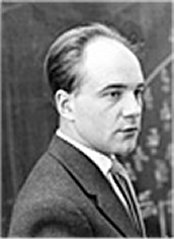
- For the picture of Horst Rittel, thanks to the Computational Design Lab at the School of Architecture, Carnegie Mellon University.
Download revised article (2013) in PDF format
 This article is
is licensed under a Creative Commons Attribution-NoDerivs 3.0 Unported License.
This article is
is licensed under a Creative Commons Attribution-NoDerivs 3.0 Unported License.
 | Morphological Analysis
| Project List
| Reference List
| Download List
| Tutorial
| About Zwicky
| MA/Carma
| Glossary
| Wicked Problems
| Contact
| Credits-Links-Legal |
| Morphological Analysis
| Project List
| Reference List
| Download List
| Tutorial
| About Zwicky
| MA/Carma
| Glossary
| Wicked Problems
| Contact
| Credits-Links-Legal |
 contact@swemorph.com